
Frozen chicken legs are an important product for deep processing of poultry. Different from fresh chicken leg processing, they pay more attention to the characteristics of water retention, low-temperature preservation, and storage and transportation resistance of the meat. They are widely used in catering prefabrication, food deep processing, and frozen product sales in supermarkets. The pre slaughter process is basically the same as that of fresh chicken legs, with core differences concentrated in three major stages: fine pretreatment, quick freezing and freshness locking, and later deep processing. The entire process is suitable for large-scale production and can preserve the original flavor and nutritional components of chicken legs to the greatest extent possible.
The pre slaughter and pretreatment of frozen chicken legs strictly follow national standards to ensure the basic quality of raw materials. After quarantine, rest, fainting and bloodletting, soaking and scalding for hair removal, and re examination of the clean chamber, the basic treatment of the chicken carcass is completed, with a focus on controlling the three key nodes of blood drainage, clean chamber, and carcass cleaning. Thoroughly draining blood is necessary to avoid the retention of stagnant blood, which can cause the frozen meat to turn black and the flavor to deteriorate; Thoroughly clean the residual impurities in the chest cavity after cleaning, rinse the inside and outside of the body with low-temperature and high-pressure water in all directions, and prevent contamination from feces and bile residues. The carcass cooling adopts a segmented cooling mode, first cooled by a pre cooling pool, and then entered a constant temperature cooling room to evenly reduce the carcass temperature to below 4 ℃, laying the foundation for subsequent segmentation processing and preventing the growth of bacteria in high-temperature segmentation.
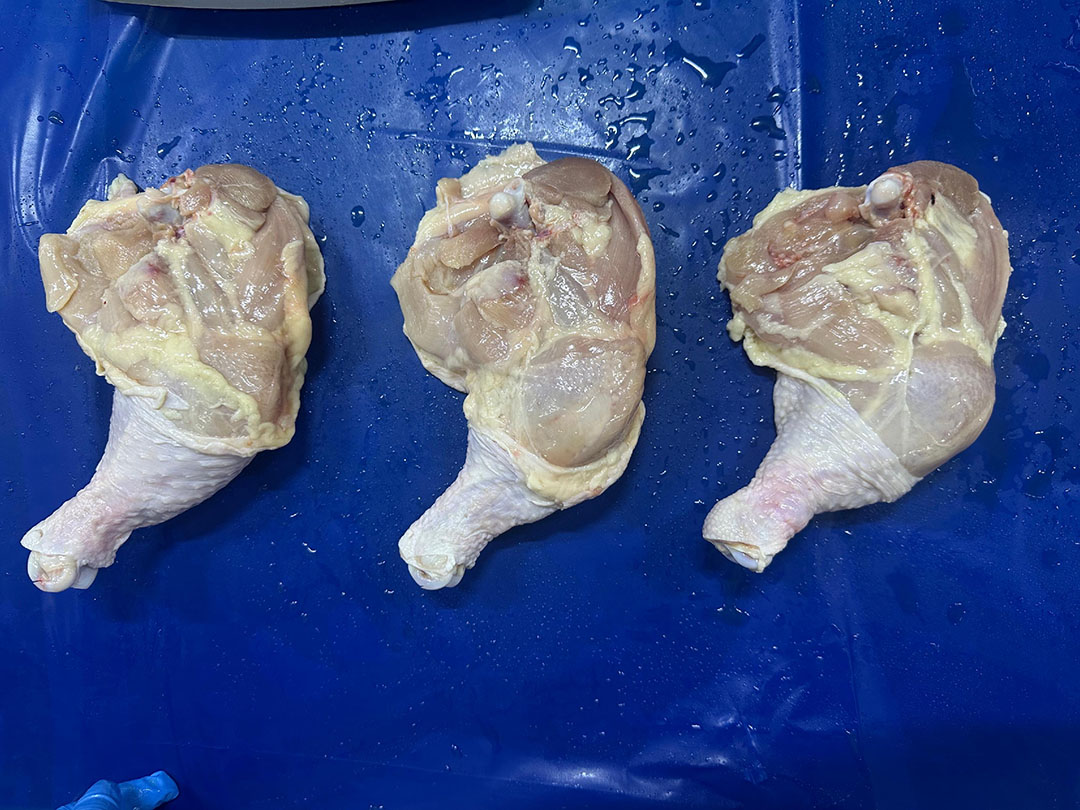
Deep segmentation and fine finishing are key steps in the processing of frozen chicken legs. The segmentation process adopts mechanized assisted manual operation to improve standardization and production efficiency, accurately segmenting full leg, thigh, and calf products, strictly controlling the flatness of the incision, without broken bones, skin, or large areas of meat loss. In response to the characteristics of frozen products, an additional refinement process is added: thoroughly removing residual immune tissues such as thymus and bursa of Fabricius in the legs, removing fine bruising points and old fascia, trimming loose epidermis, and ensuring that the product shape is neat. Simultaneously classify and remove excess fat from chicken legs, and divide them into low-fat and regular categories according to market demand, suitable for different deep processing scenarios. After finishing, perform a secondary sterile cleaning to remove minced meat and impurities generated during the segmentation process, drain surface moisture, and avoid the formation of thick ice layers after freezing.
Rapid freezing and locking processing are the core technologies for preserving the quality of frozen chicken legs. The pre processed chicken legs are quickly sent into a quick freezing tunnel, using ultra-low temperature rapid freezing technology from -35 ℃ to -40 ℃ to lock in the moisture and nutrients of the meat in a short period of time, avoiding the formation of large ice crystals that damage the meat fibers during slow freezing, effectively preventing water from flowing out, loose meat, and poor taste after thawing. After the quick freezing is completed, the products are screened and retested to remove defective products such as freeze-thaw cracking, deformation, thick ice layer, and odor. Qualified products are standardized and packaged. The packaging is made of thickened food grade moisture-proof frozen packaging bags, vacuum sealed to isolate moisture and air, and prevent product freezing, oxidation, and odor contamination.
Scientific storage and cold chain transportation ensure the long-term quality of frozen chicken legs. Finished chicken legs need to be stored in a -18 ℃ constant temperature freezer, with temperature fluctuations not exceeding ± 2 ℃, to avoid repeated temperature fluctuations that may cause ice crystals to melt and regenerate, damaging the meat structure. The warehouse implements zoning stacking and first in, first out principle to prevent product backlog and expiration. Low temperature cold chain vehicles are used throughout the transportation process, with temperature control monitoring throughout to ensure constant temperature from the factory to the end market. The frozen chicken legs processed and stored in compliance have a shelf life of up to 12 months. After thawing, the meat is firm, the flavor is pure, and there is no obvious loss of nutrients. It can meet various deep processing needs such as braising, frying, stewing, etc. At the same time, production testing records are kept throughout the process, and indicators such as microorganisms, heavy metals, and veterinary drug residues are strictly controlled to meet food safety admission standards.